

Ship recycling has always lived at the crossroads of necessity and controversy. Old ships don’t vanish into the sea mist—they must be dismantled, recycled, and reborn as steel, machinery, and materials that fuel the next industrial chapter. Bangladesh, for decades, has been one of the world’s most important ship recycling hubs. That’s the old truth.
The new truth? The industry is evolving—and GreenHul Solutions Limited is right in the middle of that transformation.
This blog dives deep into green ship recycling in Bangladesh, unpacking the risks, the reforms, the global pressure, and—most importantly—GreenHul’s responsible model that blends tradition with technology, labor with law, and profitability with purpose.
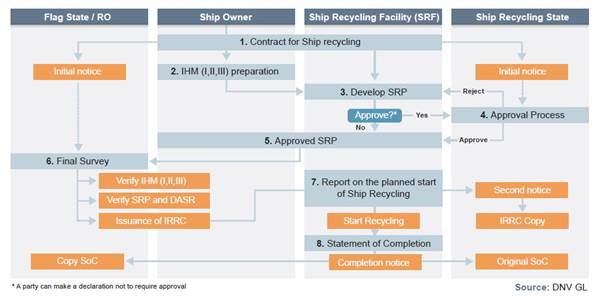
Bangladesh and the Global Ship Recycling Landscape
Roughly 90% of the world’s end-of-life ships are recycled in South Asia—primarily Bangladesh, India, and Pakistan. Bangladesh alone contributes a significant share of recycled steel to its domestic market, reducing reliance on imported raw materials and supporting infrastructure development.
But let’s be honest. Historically, ship recycling here earned a rough reputation:
- Unsafe labor practices
- Environmental contamination
- Weak regulatory enforcement
Those criticisms weren’t invented. They were earned. And that’s exactly why reform matters.
Today, Bangladesh is no longer playing defense. The country is actively aligning with international conventions, modernizing yards, enforcing safety rules, and inviting responsible players to set new benchmarks.
This is where GreenHul steps in—not as a bystander, but as a system-builder.
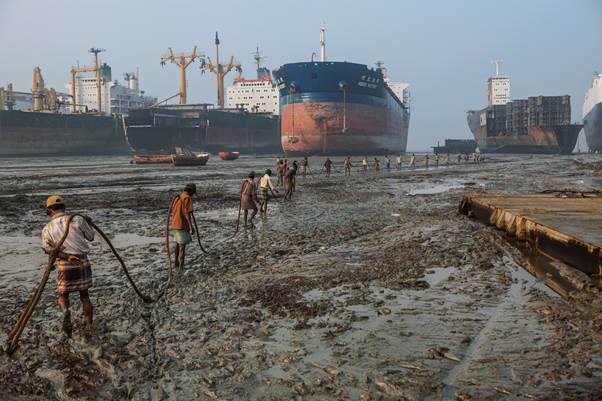
What “Green Ship Recycling” Actually Means (No Buzzwords)
“Green” is one of the most abused words in modern industry. Green ship recycling, done right, is not about optics. It’s about systems.
A genuinely green ship recycling model includes:
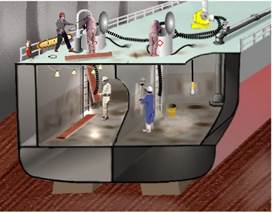
- Pre-cleaning & inventory of hazardous materials (IHM)
- Worker safety protocols and PPE compliance
- Controlled dismantling processes
- Waste segregation, treatment, and traceability
- Environmental monitoring of soil, air, and water
- Legal compliance with national and international frameworks
Anything less? That’s just paint on rust.
GreenHul’s approach starts by calling things what they are—and then fixing them from the ground up.
The Regulatory Shift in Bangladesh: From Informal to Institutional
Bangladesh’s ship recycling sector has undergone a quiet but profound regulatory shift over the last decade. Key developments include:
- Stronger enforcement of yard authorization and certification
- Mandatory worker training and medical facilities
- Environmental clearance and waste management rules
- Alignment with global frameworks like the Hong Kong Convention principles
This shift created a new reality:
Only structured, compliant, and transparent operators will survive long-term.
GreenHul didn’t wait for enforcement to catch up. Its model was built for this future—not against it.
GreenHul’s Responsible Model: Built on Five Pillars
GreenHul’s ship recycling philosophy rests on five interlocking pillars. Remove one, and the whole thing collapses. Keep all five, and you get a system that works—ethically and economically.
4.1 Safety First, Not Safety Later
In traditional yards, safety often came after production pressure. GreenHul flips the script.
Key safety elements include:
- Structured worker induction and safety training
- Mandatory PPE usage and supervision
- Emergency response plans and drills
- On-site medical readiness
The logic is simple:
A worker who feels safe works better. A safe yard works longer.
4.2 Environmental Control, Not Environmental Apology
Green ship recycling is impossible without environmental discipline.
GreenHul emphasizes:
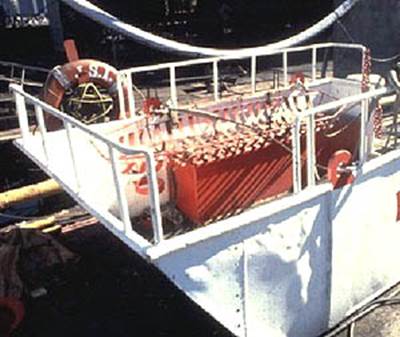
- Controlled cutting zones
- Proper handling of asbestos, oil sludge, and hazardous waste
- Waste segregation and authorized disposal channels
- Continuous environmental monitoring
Instead of apologizing after damage is done, the model prevents damage in the first place.
4.3 Compliance as Strategy, Not Burden
Many operators treat compliance as a cost. GreenHul treats it as a competitive advantage.
Why?
- Global shipowners increasingly demand compliant yards
- Banks, insurers, and international partners require ESG alignment
- Non-compliance kills long-term credibility
By embedding compliance into operations, GreenHul turns regulation into reputation.
4.4 Transparency Across the Value Chain
The future of ship recycling is traceable.
GreenHul promotes:
- Documentation at every dismantling stage
- Traceability of recycled materials
- Clear reporting to regulators and partners
In an age of audits and accountability, opacity is a liability. Transparency is currency.
4.5 Economic Sustainability (Yes, Profit Still Matters)
Let’s be real. No industry survives on ethics alone.
GreenHul’s model proves that:
- Responsible recycling can be profitable
- Efficiency improves with structure
- Safety reduces downtime and legal risk
Green doesn’t mean slow. It means smart.
Why Global Stakeholders Are Watching Bangladesh Again
International shipowners once avoided South Asian yards. That trend is reversing.
Why?
- Rising recycling costs in Europe and Turkey
- Improved compliance capacity in Bangladesh
- Stronger government oversight
- Emergence of responsible intermediaries like GreenHul
GreenHul acts as a bridge—connecting global expectations with local execution.
The message to the world is clear:
Bangladesh is not just cheaper. It’s getting better.
ESG, SDGs, and the Bigger Picture
Green ship recycling doesn’t exist in a vacuum. It ties directly into global ESG goals and Sustainable Development Objectives.
GreenHul’s work supports:
- Decent work and economic growth
- Responsible consumption and production
- Climate action through steel recycling
- Industry innovation and infrastructure
Recycling one ship responsibly saves thousands of tons of raw material extraction. Multiply that by hundreds of vessels, and the impact scales fast.
Old ships become the skeletons of new cities. That’s poetic—and practical.
Technology and Training: The Silent Upgrades
One of the least glamorous—but most powerful—parts of GreenHul’s model is capacity building.
This includes:
- Training yard management teams
- Standard operating procedures (SOPs)
- Safety audits and improvement cycles
- Advisory support for compliance upgrades
No shortcuts. No heroics. Just systems that outlast individuals.
That’s how industries mature.
Community, Labor, and Human Dignity
Ship recycling is labor-intensive. Any model that ignores workers is doomed.
GreenHul’s responsible approach recognizes:
- Workers are assets, not expendables
- Training increases safety and income stability
- Healthcare and dignity reduce turnover
This is old-school wisdom with modern execution. Treat people well, and operations stabilize.
Challenges That Still Exist (Let’s Not Pretend Otherwise)
Even with progress, challenges remain:
- Cost pressures from global shipowners
- Inconsistent enforcement across yards
- Legacy practices that resist change
- Market volatility in steel prices
GreenHul doesn’t deny these realities. It is designed around them.
Responsible recycling is not about perfection. It’s about direction.
The Future of Ship Recycling in Bangladesh
The next decade will decide whether Bangladesh becomes:
- A global benchmark for green recycling
- Or a cautionary footnote in maritime history
The difference lies in who leads the transition.
GreenHul’s model shows that:
- Compliance and competitiveness can coexist
- Sustainability can be operational, not theoretical
- Local industry can meet global standards
The tide is turning. Slowly. Steadily.
Hazardous Waste Final Disposal (Not Just Handling)
You talked about segregation—but where does it finally go?
This is a big SEO + credibility gap.
Add discussion on:
- Final disposal of asbestos, PCB, and heavy metals
- Licensed Treatment, Storage & Disposal Facilities (TSDF)
- Cross-border waste movement challenges
- Cost vs compliance dilemma
🔑 SEO keywords to insert
hazardous waste disposal ship recycling in Bangladesh
asbestos management shipbreaking
2️⃣ Beaching Method – The Elephant in the Yard 🐘
You skillfully avoided it—but readers will notice.
You should address the issue directly, even if diplomatically:
- Why is beaching still used in Bangladesh
- Environmental risks vs controlled beaching
- Engineering controls to reduce damage
- Why sudden bans are unrealistic
This shows intellectual honesty.
🔑 Keywords:
beaching method, ship recycling, Bangladesh
controlled ship beaching
3️⃣ IHM Quality & Verification Gaps
Inventory of Hazardous Materials is often mentioned—but poorly implemented.
Add:
- Fake or incomplete IHMs from flag-of-convenience vessels
- Third-party verification challenges
- Need for standardized IHM auditors
- GreenHul’s advisory role here
This screams expert-level insight.
4️⃣ Worker Health: Long-Term, Not Just Accidents
Safety ≠ health.
Add a section on:
- Chronic exposure (asbestos, fumes, heavy metals)
- Long-term medical tracking
- Occupational disease recognition gaps
- Mental health & job insecurity
Old industry, modern conscience.
5️⃣ Informal Labor & Subcontracting Risks
This is where compliance quietly leaks.
Cover:
- Subcontracted cutters and helpers
- Informal labor documentation gaps
- Wage transparency
- Child labor risk perception vs reality
Handled well, this earns trust.
6️⃣ Gender Dimension in Ship Recycling
Almost no one writes this. You should.
Add:
- Women in waste sorting, admin, and safety roles
- Lack of gender-sensitive facilities
- Training and inclusion opportunities
- ESG reporting expectations
This hits donor, UN, ESG, and policy audiences hard.
7️⃣ Financial Barriers to Green Transition
Why doesn’t everyone “just go green”
Explain:
- Cost of yard upgrades
- Access to green finance
- Insurance and bank pressure
- ROI timeline for compliance investments
Real talk = credibility.
8️⃣ Insurance, Liability & P&I Club Pressure
Global shipowners care deeply about this.
Add:
- Role of P&I Clubs
- Insurance refusal for non-compliant yards
- How compliance reduces risk premiums
- GreenHul as a risk-mitigation partner
Very strong for international SEO.
9️⃣ Data, Reporting & Digital Traceability
Future-proofing the sector.
Include:
- Digital dismantling logs
- Material traceability
- ESG reporting platforms
- Audit readiness
This positions GreenHul as forward-thinking, not reactive.
🔟 Climate Change & Carbon Accounting
Missed opportunity.
Add:
- Carbon savings from steel recycling
- Comparison vs virgin steel production
- Potential for carbon credits (future)
- Climate alignment narrative
This connects ship recycling to global climate finance.
Global Ship Recycling: Forecast & Future Trends
Stronger Enforcement of Global Standards
Across Europe and North America, regulators and major shipowners are tightening up.
The Hong Kong International Convention (HKC) — long discussed, long delayed — is gaining traction. More flag states and port states are using it as a de facto framework, even if it’s not yet fully in force.
What that means:
- Buyers won’t send ships to yards without strong compliance documentation (IHM, safety plans, environmental management systems).
- Non-compliant yards lose business, fast.
Forecast:
🏁 Within the next 5–7 years, global trade pressure will make compliance-based selection the norm — not the exception.
Keywords to know:
Hong Kong Convention Ship Recycling
IHM compliance with global ship recycling
Demand for Responsible Recycling Is Rising
Major shipping companies, especially in Europe and Japan, are now mandated by their stakeholders to show ESG due diligence across the lifecycle of assets.
This creates:
- A premium market for compliant yards
- Pressure on intermediaries to provide documentation chains
- Increasing interest in certified green recyclers
And guess who sits smack in the middle of that shift? Entities like GreenHul.
Technology Isn’t Optional Anymore
Automation, digital tracking, and transparency tools are becoming baseline expectations.
Future tech trends include:
- Electronic waste tracking from the ship to the landfill or recycler
- Remote environmental monitoring
- Worker safety wearables (yes, HealthTech enters the yard)
- Blockchain-style traceability
This isn’t science fiction — this is next-gen compliance infrastructure.
🇧🇩 Bangladesh Ship Recycling: Hope & Trajectory
🔹 1. A Legal & Institutional Uplift
Bangladesh has been quietly strengthening its regulatory framework around ship recycling. Laws are being clarified around:
- Yard authorizations
- Waste handling
- Worker safety
- Environmental management
These aren’t accidental tweaks — they’re deliberate shifts toward global acceptability.
Forecast:
🟢 In the next 3–5 years, Bangladesh can transition from a cost-centered market to a responsible market choice — if compliance is enforced consistently.
(And stakeholders like GreenHul help make that enforcement real, not vague.)
🔹 2. Competitive Advantages Bangladesh Still Has
Even with stricter rules elsewhere, Bangladesh retains:
✔ Lower operational costs (relative to Europe)
✔ Large existing workforce
✔ A strategic position in the South Asia recycling corridor
✔ Local steel industry demand for recycled materials
These are not trivial benefits — they’re durable competitive edges.
Reputation Rebalancing
Bangladesh has historically been criticized for poor environmental and safety outcomes. But that narrative is shifting — slowly, but perceptibly.
Drivers include:
- International auditing
- ESG reporting requirements
- Buyer preferences for documented compliance
- Civil society pressure
Even donors and development agencies are interested — not to punish, but to partner.
📊 Sector Forecast Highlights
Here’s the view if you zoom out:
| Trend Global Bangladesh Compliance standards rising HIGH HIGH Market demand for green recycling HIGH MEDIUM–HIGH Cost competitiveness MEDIUM HIGH Technology adoption ACCELERATING ACCELERATING ESG investor interest HIGH GROWING Government enforcement GROWING STEADY INCREASE |
What This Means for GreenHul (and Partners)
🔹 1. GreenHul Can Be a Market Shaper
Not just a participant — a leader in:
- Compliance frameworks
- Transparency and traceability
- Worker safety systems
- Environmental performance protocols
You’re not chasing the wave — you’re designing it.
🔹 2. Growth Isn’t Just Domestic — It’s Regional
Bangladesh won’t monopolize the market forever. But it could become the preferred choice for responsible recycling in South Asia.
This pulls in:
- International shipowners
- Compliance-seeking intermediaries
- ESG-oriented financiers
🔹 3. Finance & Insurance Will Follow Compliance
Insurance premiums will favor compliant yards.
Banks will prefer financing projects with clear environmental risk frameworks.
donors may subsidize capacity upgrades.
Money flows where risk is lowest, and documentation is clear.
Conclusion: Old Ships, New Standards
Ship recycling is one of the world’s oldest industrial practices. But in Bangladesh, it’s being rewritten with modern rules and moral clarity.
GreenHul’s responsible model doesn’t erase the past—it learns from it. It respects the labor that built the industry while demanding systems that protect people, planet, and profit.
Steel may be recycled. Reputation is harder.
And that’s why green ship recycling in Bangladesh isn’t just an environmental story.
It’s an industrial coming-of-age story.
If the past was about breaking ships, the future—guided by GreenHul—is about building trust.